

 EN
EN DE
DE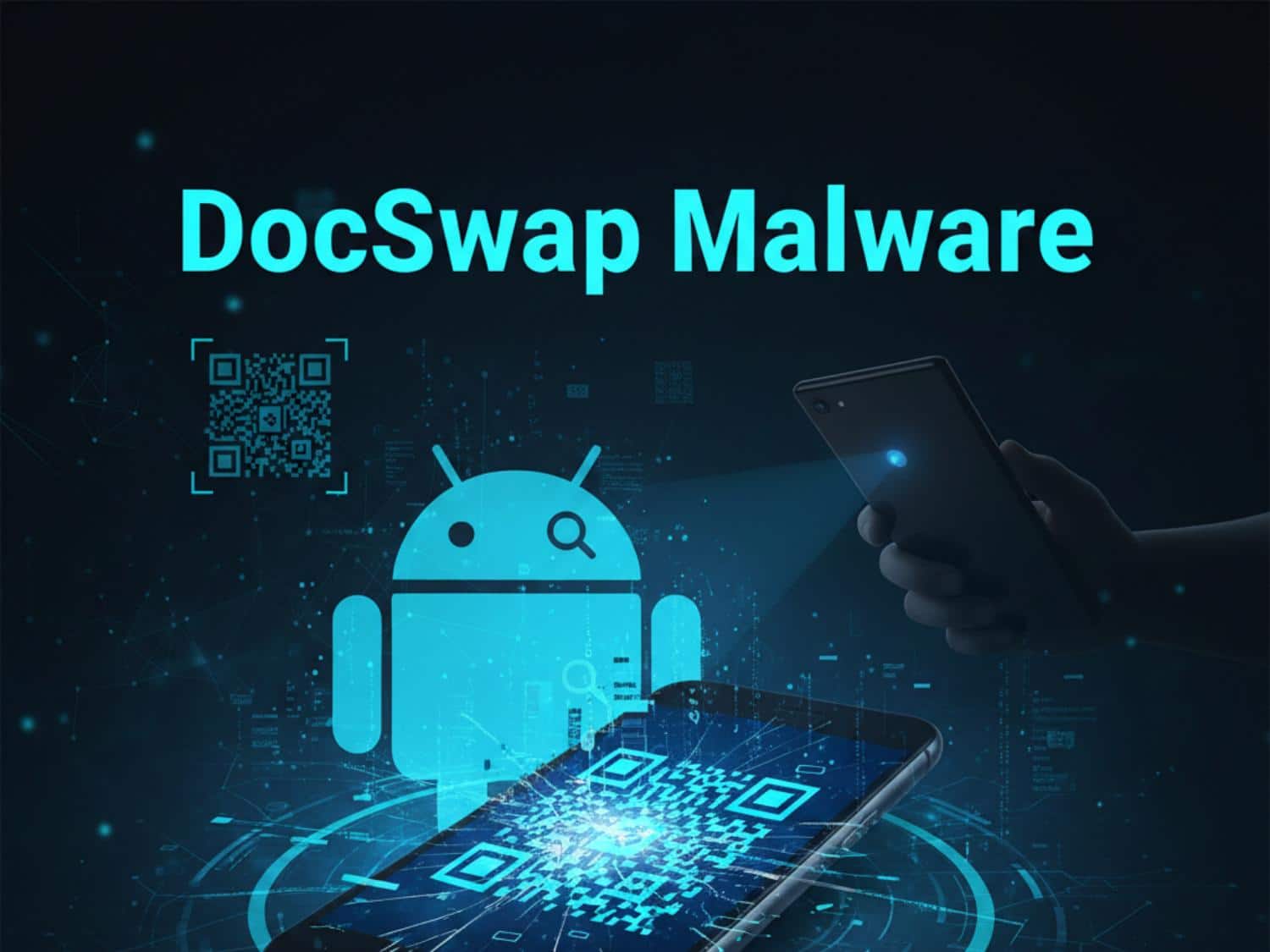
DocSwap is a newly uncovered Android malware strain attributed to the North Korea–linked threat actor Kimsuky. First reported in December 2025, the malware is distributed through QR-code phishing campaigns that impersonate legitimate logistics and customs notifications, particularly those associated with the South Korean delivery company CJ Logistics. Unlike ransomware, DocSwap does not encrypt files or extort victims for payment. Instead, it is designed for covert surveillance, credential theft, and long-term access to compromised mobile devices.
Information on “DocSwap Android Malware”
| Malware Name | DocSwap |
|---|---|
| Threat Type | Android Malware / Remote Access Trojan (RAT) |
| Attributed Threat Actor | Kimsuky (North Korea-linked) |
| First Detected / Reported | December 2025 |
| Affected Operating System | Android |
| Known Disguised APK | SecDelivery.apk |
| Primary Distribution Method | QR-code phishing via fake delivery and customs notices |
Infection Vector and Delivery Technique
The infection chain typically begins with smishing messages or phishing emails posing as shipment updates or customs security alerts. Victims are directed to a malicious website that displays a QR code when accessed from a desktop device. Scanning this QR code on an Android phone redirects the user to a page prompting them to install a supposed shipment-tracking or security verification application.
To bypass Android’s default security warnings, the attackers falsely claim that the application is an official release required to comply with international shipping or customs regulations. Once installed, the application decrypts and loads an embedded, encrypted APK payload and registers a malicious background service without the user’s awareness.
Capabilities and Post-Infection Behavior
- DocSwap deploys a fully featured remote access trojan, granting attackers persistent control over the infected device.
- The malware can log keystrokes, intercept SMS messages, and capture one-time passwords used for two-factor authentication.
- Additional capabilities include recording audio, activating the camera, collecting location data, and accessing contacts and call logs.
- The trojan supports remote command execution and file upload/download operations.
- To reduce suspicion, the app displays legitimate CJ Logistics tracking pages while malicious activity continues in the background.
Threat Context and Risk Assessment
DocSwap highlights a broader shift toward mobile-centric espionage campaigns that exploit the widespread use of QR codes in everyday business operations. By redirecting victims from secured corporate environments to personal Android devices, attackers can bypass traditional email filtering and endpoint protection mechanisms. This technique is particularly effective in logistics, supply chain, and compliance-driven industries where QR codes are scanned frequently as part of routine workflows.
Conclusion
Although DocSwap is not ransomware, it represents a significant cyber threat due to its stealth, persistence, and extensive surveillance capabilities. Successful infections can lead to credential compromise, unauthorized access to corporate systems, and prolonged espionage activity without immediate detection.
As specialists in high-impact cyber incidents, we support organizations facing advanced threats through rapid containment, investigation, and response via our Incident Response Retainer. Early identification and decisive action remain critical to limiting exposure and preventing further escalation.
Last updated on: December 19, 2025
Related posts
The Emergence of the Crimson Collective Ransomware
Crimson Collective is a newly identified ransomware-related cyber threat group that surfaced around September 2025. While often associated with ransomware-style extortion, the group primarily focuses on large-scale data exfiltration and leverage-based attacks rather than traditional file encryption. Their operations have drawn significant attention following claims of a major breach involving Red Hat, where they allegedly […]
19.03.2026
The Emergence of the Insomnia Ransomware
Insomnia is a newly identified cyber threat operation that surfaced around October 2025, initially appearing as a ransomware-related threat actor, but quickly distinguishing itself through a fundamentally different approach. Unlike traditional ransomware groups, Insomnia does not rely on file encryption or the use of a ransomware file extension. Instead, it focuses exclusively on large-scale data exfiltration and […]
19.03.2026
The Emergence of the Tengu Ransomware
Tengu is a modern ransomware variant that surfaced around October 2025 and has quickly established itself as an active cyber threat across multiple regions. Operating as a Ransomware-as-a-Service (RaaS) model, Tengu enables affiliates to carry out attacks using shared infrastructure and tooling. Once deployed, the malware encrypts victim data and appends the ransomware file extension “.tengu” to affected files, […]
19.03.2026
News Week: March 9th to March 15th, 2026
ClickFix Variant Abuses Windows Terminal to Bypass Security Controls A newly observed ClickFix variant demonstrates how attackers continue refining social engineering techniques to evade detection and increase success rates. Instead of using the traditional Run dialog, victims are instructed to launch Windows Terminal, creating a more trusted environment for executing malicious commands. Once executed, the […]
16.03.2026You are currently viewing a placeholder content from Wistia. To access the actual content, click the button below. Please note that doing so will share data with third-party providers.
More InformationYou are currently viewing a placeholder content from reCAPTCHA. To access the actual content, click the button below. Please note that doing so will share data with third-party providers.
More Information