


 EN
EN DE
DE
Why Perfect Ransomware Prevention Is Unrealistic
Expecting security vendors to block every ransomware attack ignores a core reality of cybersecurity: protection depends on detection, and detection is never flawless. Defensive tools classify activity as either legitimate or malicious based largely on historical patterns. Attackers exploit this by constantly altering payloads, behaviors, and delivery techniques, making new threats appear harmless or entirely unfamiliar. Tightening controls too aggressively increases false positives, disrupting normal business operations. Relaxing them reduces friction but raises the risk of false negatives, allowing ransomware to execute unnoticed. There is no universal configuration that eliminates both outcomes. Even strict allowlisting strategies collapse under the weight of continuous software updates, patches, and custom applications. The need for constant security updates itself proves that defenses are reactive. Rather than chasing perfection, organizations must complement prevention with resilience, emphasizing rapid recovery, data protection, and continuity planning.
Deterministic Ransomware Prevention Enters the MDR Stack
The launch of Pondurance’s RansomSnare module reflects a broader shift in cybersecurity strategy: moving beyond purely detection-driven defenses toward mechanisms designed to interrupt ransomware at the point of impact. Traditional EDR tools provide critical visibility and post-event analysis, yet many alerts occur only after encryption or data exfiltration has already begun. RansomSnare positions itself differently by suspending a malicious process at the first encryption attempt, aiming to neutralize threats without dependence on signatures, behavioral baselines, or constant updates. For mid-market organizations—often constrained by lean security teams, budget limitations, and regulatory pressure tied to PHI and PII—this approach emphasizes prevention of operational disruption rather than just faster detection. While no single control eliminates risk, integrating deterministic ransomware prevention into an MDR framework can add a valuable resilience layer, buying responders time to investigate, contain, and recover before material damage escalates.
HoneyMyte Enhances CoolClient with Browser Credential Theft
Recent research highlights how the HoneyMyte group (also known as Mustang Panda) continues refining its CoolClient malware to deepen data-harvesting capabilities. The updated variants extend beyond backdoor access, incorporating a browser credential stealer aimed at extracting stored login data from Chrome, Edge, and other Chromium-based browsers. The malware leverages DLL sideloading by abusing legitimate applications, allowing malicious code to run under the guise of trusted software. Once active, it copies browser databases and configuration files, retrieves encrypted master keys, and uses Windows DPAPI functions to decrypt saved usernames and passwords. Harvested credentials are staged in hidden directories before exfiltration, often alongside additional surveillance features such as keylogging and clipboard monitoring. This evolution underscores a shift toward persistent intelligence collection and account compromise. Government and regulated organizations should prioritize behavioral monitoring, application control, and anomaly detection to identify CoolClient activity and related credential-stealing behaviors early.
Trusted AI Platforms Become Unexpected Malware Distribution Channels
The abuse of Hugging Face as a hosting layer for Android malware illustrates how attackers increasingly weaponize reputable cloud and AI platforms to bypass user suspicion and traditional filtering controls. In the observed campaign, victims were first tricked into installing a dropper app masquerading as a security utility. Rather than delivering the malicious payload directly, the dropper redirected downloads to a Hugging Face dataset repository, leveraging trusted infrastructure and CDN delivery to reduce detection friction. Researchers noted heavy use of server-side polymorphism, generating fresh APK variants at short intervals to evade signature-based defenses. The final malware functioned as a remote access tool exploiting Android Accessibility Services to capture screens, deploy phishing overlays, block removal attempts, and harvest credentials from financial apps. Although Hugging Face removed the identified repositories, the case highlights a broader defensive challenge: trusted services can unintentionally serve as staging points, reinforcing the need for behavioral analysis, permission scrutiny, and user awareness.
DynoWiper Highlights the Ongoing Threat of Destructive Wiper Malware
ESET’s analysis of DynoWiper reveals a carefully staged data-destruction operation targeting Poland’s energy sector, reinforcing concerns about the resurgence of wiper malware in modern conflicts. Unlike financially motivated ransomware, DynoWiper’s design focuses on irreversible system damage through selective file overwriting, multi-phase wiping routines, and forced reboots. Researchers observed notable similarities to the ZOV wiper, including directory exclusion logic and differentiated handling of small versus large files—patterns often associated with Sandworm’s destructive playbook. The attackers’ use of DLL sideloading, scheduled tasks, PowerShell-based deployment, and credential-access tools such as Rubeus and LSASS dumping further aligns with known Sandworm TTPs. However, limited visibility into initial access and staging activities results in only medium-confidence attribution. The incident underscores a critical defensive lesson: organizations must prepare not only for data theft but also for sabotage-oriented attacks where disruption, operational paralysis, and recovery challenges outweigh traditional breach impacts.
Conclusion
Ransomware, credential-stealing malware, destructive wipers, and the abuse of trusted platforms collectively demonstrate that cyber threats continue to evolve faster than purely preventive defenses. Organizations must balance detection, prevention, and resilience, recognizing that operational continuity and rapid recovery are just as critical as blocking initial compromise.
As ransomware and cybersecurity experts, we support businesses through Ransomware Recovery Services, including our ransomware decryption service, as well as Ransomware Negotiation Services and a proactive Incident Response Retainer designed to minimize damage and downtime. If your organization needs expert assistance before, during, or after a cyber incident, contact our team today.
Related posts

The Emergence of the Crimson Collective Ransomware
Crimson Collective is a newly identified ransomware-related cyber threat group that surfaced around September 2025. While often associated with ransomware-style extortion, the group primarily focuses on large-scale data exfiltration and leverage-based attacks rather than traditional file encryption. Their operations have drawn significant attention following claims of a major breach involving Red Hat, where they allegedly […]
19.03.2026
The Emergence of the Insomnia Ransomware
Insomnia is a newly identified cyber threat operation that surfaced around October 2025, initially appearing as a ransomware-related threat actor, but quickly distinguishing itself through a fundamentally different approach. Unlike traditional ransomware groups, Insomnia does not rely on file encryption or the use of a ransomware file extension. Instead, it focuses exclusively on large-scale data exfiltration and […]
19.03.2026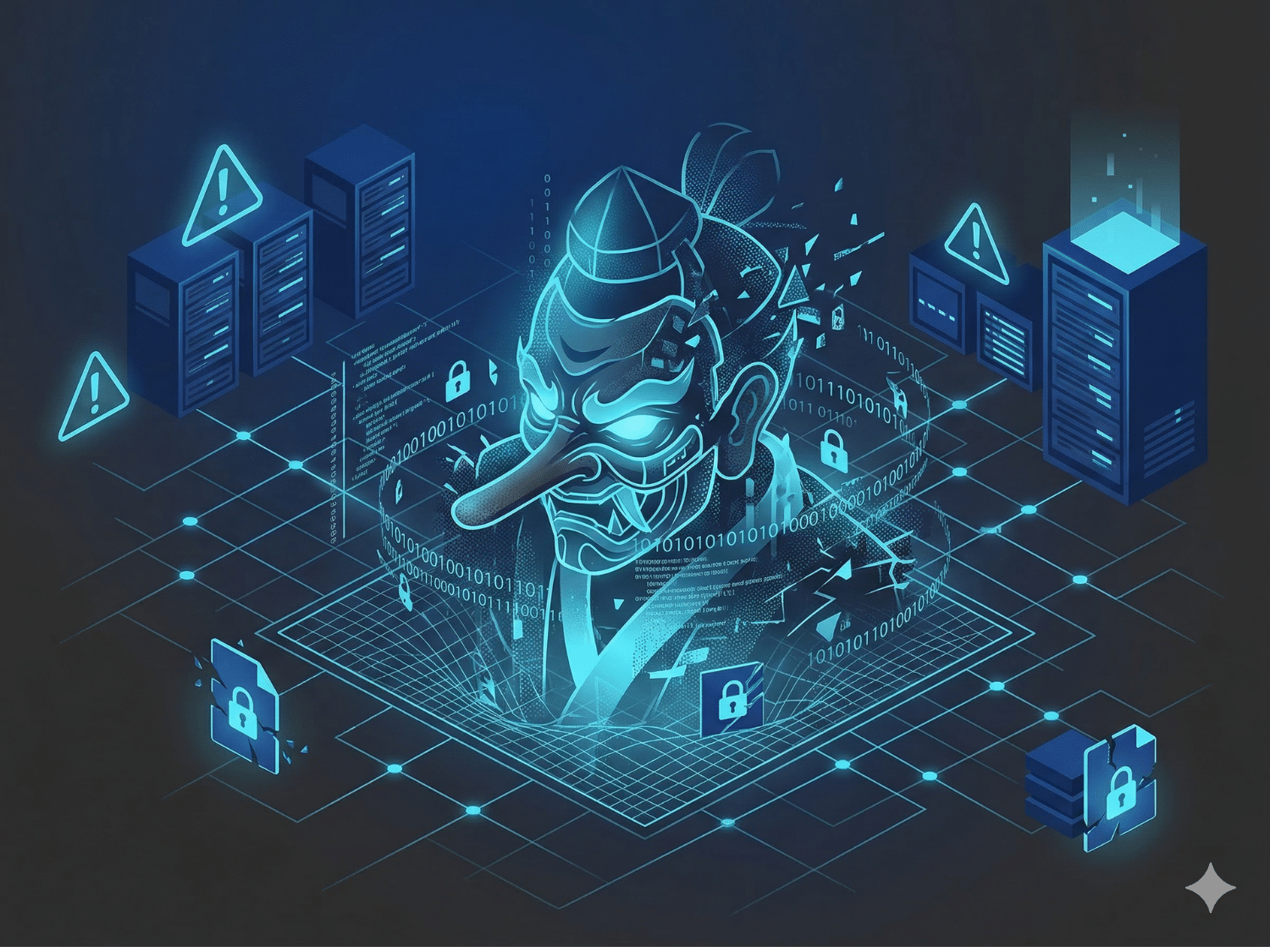
The Emergence of the Tengu Ransomware
Tengu is a modern ransomware variant that surfaced around October 2025 and has quickly established itself as an active cyber threat across multiple regions. Operating as a Ransomware-as-a-Service (RaaS) model, Tengu enables affiliates to carry out attacks using shared infrastructure and tooling. Once deployed, the malware encrypts victim data and appends the ransomware file extension “.tengu” to affected files, […]
19.03.2026
News Week: March 9th to March 15th, 2026
ClickFix Variant Abuses Windows Terminal to Bypass Security Controls A newly observed ClickFix variant demonstrates how attackers continue refining social engineering techniques to evade detection and increase success rates. Instead of using the traditional Run dialog, victims are instructed to launch Windows Terminal, creating a more trusted environment for executing malicious commands. Once executed, the […]
16.03.2026You are currently viewing a placeholder content from Wistia. To access the actual content, click the button below. Please note that doing so will share data with third-party providers.
More Information