


 EN
EN DE
DE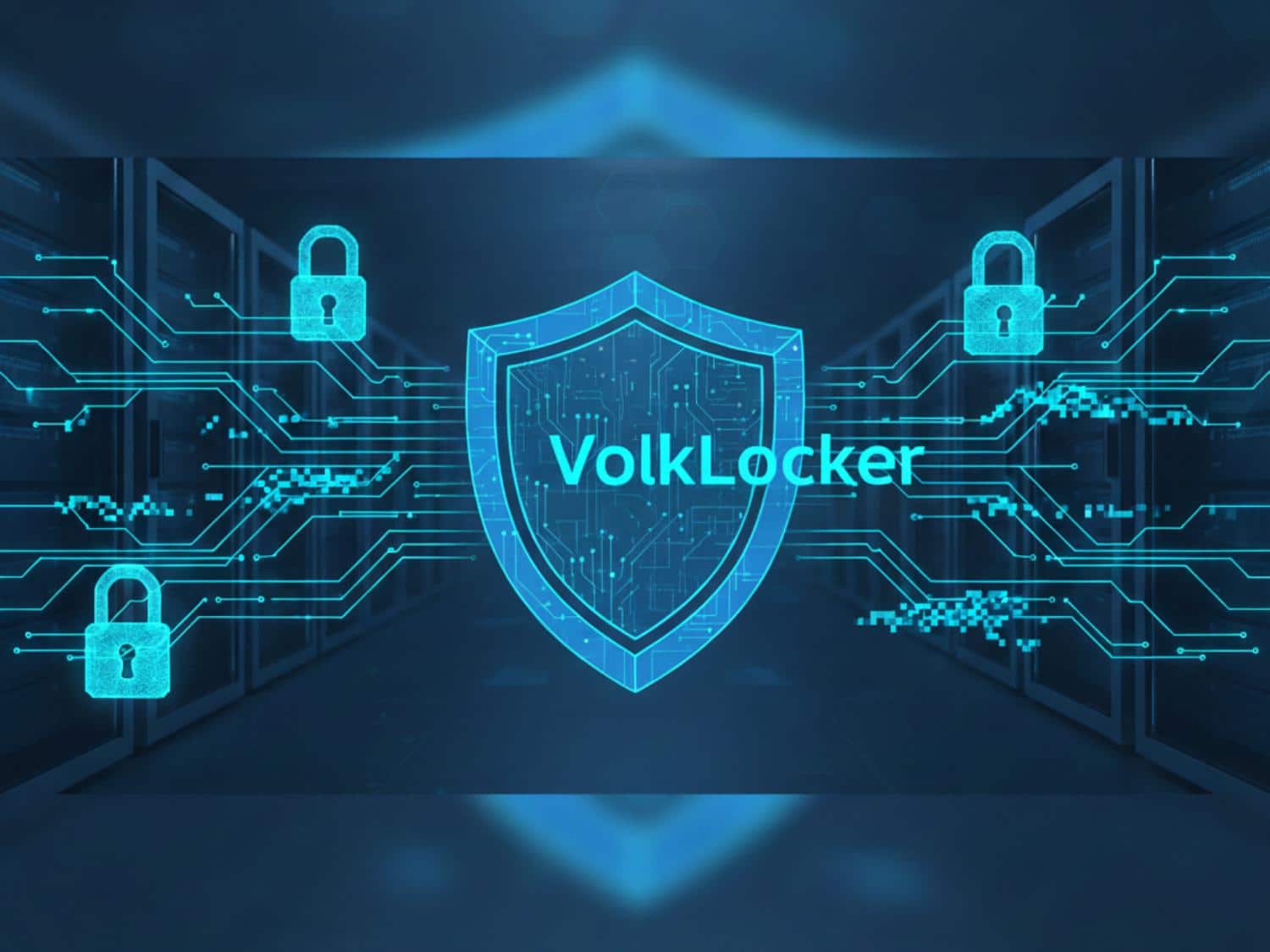
First identified in August 2025, VolkLocker is a newly discovered ransomware variant operated by the pro-Russian hacktivist group CyberVolk (also known as GLORIAMIST). Designed as a ransomware-as-a-service (RaaS) offering, VolkLocker targets both Windows and Linux systems and encrypts files using strong cryptographic routines. Notably, security researchers have uncovered a critical implementation flaw that allows affected victims to decrypt their files without paying the ransom. During encryption, the malware appends a configurable ransomware file extension, commonly observed as “.locked” or “.cvolk,” effectively restricting access to critical data.
Information on “VolkLocker Ransomware”
| Ransomware Name | VolkLocker Ransomware |
|---|---|
| First Detected/Reported | August 2025 |
| Affects OS | Windows, Linux |
| File Extension | .locked, .cvolk (configurable) |
| Ransom Note | cybervolk_ransom.html |
| Communication Method | Telegram-based command and control |
Technical Characteristics and Attack Flow
VolkLocker is written in Golang, enabling cross-platform deployment across heterogeneous environments. Once executed, the ransomware attempts privilege escalation and performs extensive system reconnaissance, including virtual machine and sandbox detection through MAC address checks associated with VMware and Oracle VirtualBox. After validating the environment, it enumerates all available drives and selectively encrypts files based on predefined exclusion lists to preserve system stability.
Additional Information
- VolkLocker uses AES-256 encryption in Galois/Counter Mode (GCM), generating a unique nonce for each encrypted file.
- The ransomware incorporates virtual machine and sandbox detection to evade security research and automated analysis environments.
- A severe design flaw causes VolkLocker to write its master encryption key in plaintext to
%TEMP%\system_backup.key, enabling file decryption for free without contacting the attackers. - The malware disables security tools and recovery mechanisms, including Windows Defender, Task Manager, Registry Editor, and Volume Shadow Copies.
- An enforcement timer triggers destructive behavior if payment is not made within 48 hours or if incorrect decryption attempts exceed three tries, deleting user folders such as Documents, Desktop, Downloads, and Pictures.
- CyberVolk operates VolkLocker as a paid RaaS offering via Telegram, with pricing tiers for Windows-only, Linux-only, or combined cross-platform builds.
Conclusion
VolkLocker Ransomware highlights the evolving landscape of ransomware operations, particularly the growing focus on cross-platform attacks and automated RaaS ecosystems. While the malware demonstrates advanced techniques such as sandbox evasion, destructive enforcement timers, and registry-based persistence, its effectiveness is fundamentally undermined by a critical cryptographic implementation error. In many cases, victims can recover encrypted data without paying a ransom, underscoring the importance of expert-led analysis before engaging with threat actors.
As specialists in ransomware recovery and cybersecurity, we provide essential services such as Ransomware Recovery Services, Ransomware Negotiation Services, and our Incident Response Retainer. Contact us today to safeguard your data and respond effectively to ransomware incidents.
Last updated on: December 18, 2025
Related posts
The Emergence of the Crimson Collective Ransomware
Crimson Collective is a newly identified ransomware-related cyber threat group that surfaced around September 2025. While often associated with ransomware-style extortion, the group primarily focuses on large-scale data exfiltration and leverage-based attacks rather than traditional file encryption. Their operations have drawn significant attention following claims of a major breach involving Red Hat, where they allegedly […]
19.03.2026
The Emergence of the Insomnia Ransomware
Insomnia is a newly identified cyber threat operation that surfaced around October 2025, initially appearing as a ransomware-related threat actor, but quickly distinguishing itself through a fundamentally different approach. Unlike traditional ransomware groups, Insomnia does not rely on file encryption or the use of a ransomware file extension. Instead, it focuses exclusively on large-scale data exfiltration and […]
19.03.2026
The Emergence of the Tengu Ransomware
Tengu is a modern ransomware variant that surfaced around October 2025 and has quickly established itself as an active cyber threat across multiple regions. Operating as a Ransomware-as-a-Service (RaaS) model, Tengu enables affiliates to carry out attacks using shared infrastructure and tooling. Once deployed, the malware encrypts victim data and appends the ransomware file extension “.tengu” to affected files, […]
19.03.2026
News Week: March 9th to March 15th, 2026
ClickFix Variant Abuses Windows Terminal to Bypass Security Controls A newly observed ClickFix variant demonstrates how attackers continue refining social engineering techniques to evade detection and increase success rates. Instead of using the traditional Run dialog, victims are instructed to launch Windows Terminal, creating a more trusted environment for executing malicious commands. Once executed, the […]
16.03.2026You are currently viewing a placeholder content from Wistia. To access the actual content, click the button below. Please note that doing so will share data with third-party providers.
More InformationYou are currently viewing a placeholder content from reCAPTCHA. To access the actual content, click the button below. Please note that doing so will share data with third-party providers.
More Information