


 EN
EN DE
DE
Spear-phishing via advertising infrastructure
A recently uncovered spear-phishing operation demonstrates how attackers are abusing online advertising mechanisms to deliver advanced malware. In this campaign, known as Operation Poseidon, carefully crafted phishing emails redirect victims through legitimate Google Ads tracking domains before leading them to compromised websites hosting malicious payloads. By hiding harmful destinations inside trusted advertising parameters, the attackers significantly reduce suspicion and bypass common email security controls. The activity has been attributed to the Konni APT group, which primarily targets South Korean organizations using socially engineered lures disguised as financial or official documents. Once accessed, compressed files deploy shortcut-based execution chains that ultimately load the EndRAT remote access trojan directly into memory. This method avoids traditional file-based detection and allows the attackers to maintain stealthy persistence while rapidly rotating infrastructure across hacked WordPress sites.
Stealthy backdoor deployed during ransomware intrusion
A ransomware incident at a major financial institution has revealed a previously undocumented Windows backdoor designed for covert, long-term access. The malware, named PDFSider, was uncovered during forensic analysis and appears to function as an initial foothold for broader compromise. The intrusion relied heavily on social engineering, with attackers impersonating IT staff and convincing employees to install Microsoft Quick Assist, a legitimate remote-support tool. Once access was established, PDFSider was delivered via phishing emails containing ZIP archives that abused DLL side-loading through a signed PDF24 Creator application. The backdoor operates largely in memory, gathers system fingerprints, and communicates with attacker infrastructure using encrypted DNS traffic. While PDFSider has been linked to campaigns involving the Qilin ransomware, researchers note that its adoption is spreading across multiple threat actors, highlighting its value for persistent, low-noise access within high-value networks.
Backdoor targeting virtualized infrastructure
A recent malware analysis published by CISA details an advanced backdoor designed to operate deep inside virtualized enterprise environments. The threat, tracked as BRICKSTORM, specifically targets VMware vSphere components such as vCenter servers and ESXi hosts, allowing attackers to retain covert, long-term access. Active since at least 2024, the malware was observed during an extended intrusion in which adversaries quietly expanded control, accessed domain controllers, and extracted sensitive cryptographic material from identity infrastructure. BRICKSTORM is engineered for persistence, reinstalling itself automatically if disrupted and remaining largely invisible to traditional monitoring tools. Multiple variants have been identified, built in both Go and Rust, highlighting ongoing development. Its ability to blend encrypted command-and-control traffic into normal DNS-over-HTTPS activity makes BRICKSTORM particularly effective at evading detection while enabling data theft and lateral movement.
Leaked panel reveals ongoing ransomware operations
Newly exposed materials from the LockBit 5.0 affiliate panel provide rare insight into how a major ransomware-as-a-service (RaaS) operation continues to function despite sustained law-enforcement pressure. The leaked dashboard shows a mature backend used by affiliates to manage campaigns, negotiate payments, and coordinate attacks at scale, indicating that LockBit’s core workflows remain largely unchanged. While cosmetic updates suggest active maintenance, the bigger development is the release of four new encryption variants: LB_Black_14_01_2026 for Windows environments, LB_Linux_14_01_2026 targeting Linux systems, LB_ESXi_14_01_2026 aimed at VMware ESXi, and the specialized LB_ChuongDong_14_01_2026 variant. This multi-platform expansion underscores how the RaaS model enables rapid adaptation across diverse infrastructures. Despite waning trust among affiliates, LockBit leadership appears focused on maintaining operational reach rather than restructuring its ecosystem.
BYOVD-driven ransomware highlights shifting threat landscape
A newly identified ransomware strain named Osiris illustrates how attackers are combining bespoke drivers and familiar tooling to evade defenses. In this case, threat actors used the malicious POORTRY driver in a bring your own vulnerable driver (BYOVD) attack to disable endpoint protection before deploying Osiris, an encryption payload designed for precise control and per-file keys. Investigators observed data exfiltration via Rclone to Wasabi buckets and tooling overlaps that suggest possible links to INC ransomware. This activity emerges amid a broader ecosystem where ransomware variants such as Akira, Qilin, Play, SafePay, RansomHub, DragonForce, Rhysida, CACTUS, Makop, Lynx, 01flip, LockBit 5.0, and newer RaaS-style operations like Sicarii continue to evolve. Together, these developments show how ransomware actors are refining privilege escalation, persistence, and cross-platform targeting to maintain pressure on enterprise environments.
Conclusion
The emergence of Osiris and the broader surge in advanced ransomware activity highlight how quickly threat actors are refining their techniques, from BYOVD-based defense evasion to cross-platform targeting and data exfiltration. These developments underline the importance of rapid detection, expert response, and well-prepared recovery strategies when facing modern ransomware incidents.
As ransomware and cybersecurity specialists, we support organizations before, during, and after an attack through dedicated Ransomware Recovery Services, professional Ransomware Negotiation Services, and proactive protection via an Incident Response Retainer. If your organization needs expert help with ransomware decryption, incident containment, or long-term resilience, reach out to discuss how we can support your recovery and security goals.
Related posts

The Emergence of the Crimson Collective Ransomware
Crimson Collective is a newly identified ransomware-related cyber threat group that surfaced around September 2025. While often associated with ransomware-style extortion, the group primarily focuses on large-scale data exfiltration and leverage-based attacks rather than traditional file encryption. Their operations have drawn significant attention following claims of a major breach involving Red Hat, where they allegedly […]
19.03.2026
The Emergence of the Insomnia Ransomware
Insomnia is a newly identified cyber threat operation that surfaced around October 2025, initially appearing as a ransomware-related threat actor, but quickly distinguishing itself through a fundamentally different approach. Unlike traditional ransomware groups, Insomnia does not rely on file encryption or the use of a ransomware file extension. Instead, it focuses exclusively on large-scale data exfiltration and […]
19.03.2026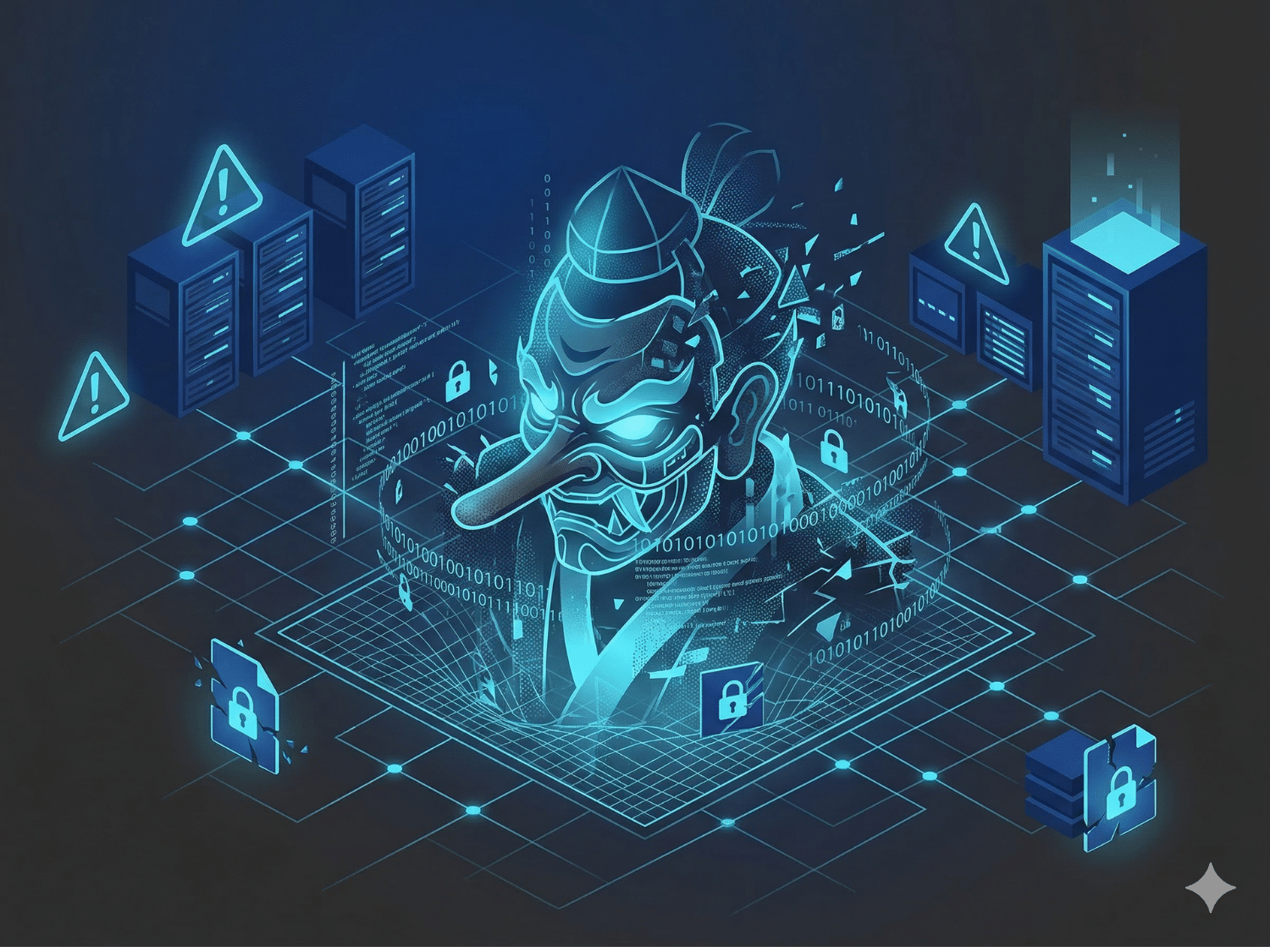
The Emergence of the Tengu Ransomware
Tengu is a modern ransomware variant that surfaced around October 2025 and has quickly established itself as an active cyber threat across multiple regions. Operating as a Ransomware-as-a-Service (RaaS) model, Tengu enables affiliates to carry out attacks using shared infrastructure and tooling. Once deployed, the malware encrypts victim data and appends the ransomware file extension “.tengu” to affected files, […]
19.03.2026
News Week: March 9th to March 15th, 2026
ClickFix Variant Abuses Windows Terminal to Bypass Security Controls A newly observed ClickFix variant demonstrates how attackers continue refining social engineering techniques to evade detection and increase success rates. Instead of using the traditional Run dialog, victims are instructed to launch Windows Terminal, creating a more trusted environment for executing malicious commands. Once executed, the […]
16.03.2026You are currently viewing a placeholder content from Wistia. To access the actual content, click the button below. Please note that doing so will share data with third-party providers.
More Information